The Hair Color Wheel & Neutralizing Warmth: Brassiness Cancellation Guide
The short answer: On the hair color wheel, colors opposite each other guide how to soften unwanted warmth: violet balances yellow, blue balances orange, and green balances red. If your lightened brunette hair looks distinctly orange, purple shampoo aimed at yellow blonde will usually be the wrong tool. First identify the color you actually see in daylight; then decide whether you need a tinted maintenance product, a salon toner, or more lightening to reach your goal. The wheel changes the tone you see. It does not make hair lighter.
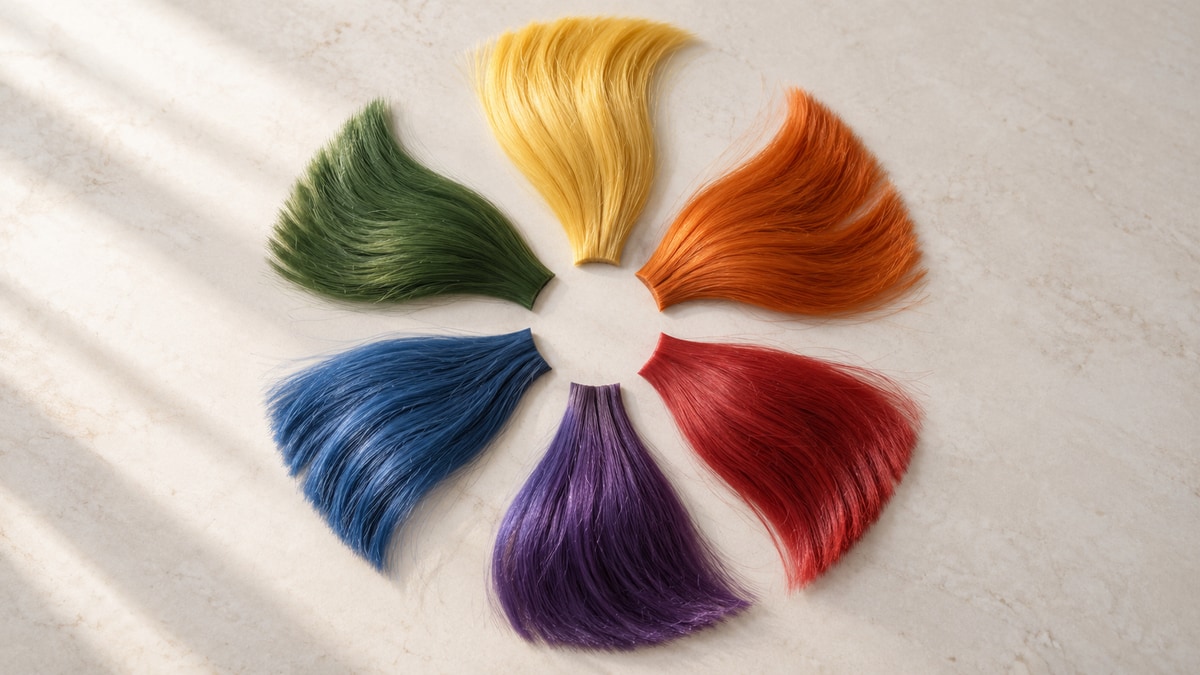
On a narrow screen, scroll sideways to compare every column.
| What you see | Opposite direction | Where it often appears | First decision |
|---|---|---|---|
| Yellow or pale yellow | Violet | Very light blonde, often around levels 9–10 | Choose a violet-toning direction if you want a cooler blonde. |
| Orange or copper-orange | Blue | Lifted brunette or darker blonde, often around levels 6–8 depending on the actual background | Compare a blue-toning option with your current depth; do not expect it to create pale blonde. |
| Red or red-brown | Green | Deeper brown or black-looking hair, often around levels 1–5 | Ask a colorist to identify the red source before using a strong green corrector. |
These are color directions, not dye recipes. Many real heads of hair show yellow-orange or red-orange rather than one pure color. Hair-color lines also classify exposed warmth differently by level. For example, Wella Color Charm’s professional education workbook pairs opposite hues on a wheel and shows warm backgrounds along a lightening scale. Use the visible warmth and a professional swatch alongside the number. If depth is unfamiliar, start with the hair color levels guide.
The Hairdresser’s Color Wheel: How It Works
The wheel begins with three primary colors—red, yellow, and blue. Combining neighboring primaries gives the secondary colors orange, green, and violet. The hues between these are tertiary colors, such as yellow-orange or blue-violet. This matters because brassiness often sits between named colors. A colorist may need a more nuanced cool direction than a bottle labeled simply “purple” or “blue.” The Wella Color Charm workbook lays out these color groups and the role of opposite colors in hair-color selection.
Complementary colors sit directly across the wheel. When an appropriate amount of the opposite pigment is added to a warm-looking base, that unwanted reflection can appear less strong and more neutral. “Cancel” is salon shorthand; it does not mean the warm pigment disappears from the hair. The result depends on the starting color, hair porosity, product, amount deposited, and processing instructions. Too much cool pigment can leave a dull or tinted cast. Wella’s color-wheel explanation describes blue against orange, green against red, and violet against yellow.
There is a second axis to every decision: level, or how dark or light the hair is. Level 6 orange hair and level 9 pale yellow hair do not need the same tonal plan. A blue product might soften the orange appearance at level 6, but it cannot turn that base into a light, cool level 9 blonde. Lightening and toning are separate parts of a service. Wella’s orange-hair guidance likewise begins with the exposed warmth and notes that yellow-orange at level 7 can call for both blue and violet directions.
The wheel is also a choice, not a command to remove every warm note. If you like a copper, honey, or golden finish, you may want to keep that reflection. Neutralization is useful when the visible warmth conflicts with your target. Hold an unfiltered reference beside your dry hair in indirect daylight and ask whether you want less warmth at the same depth or a lighter color. That distinction determines whether toning alone can address your concern.
The 3 Golden Neutralization Pairs
Violet Cancels Yellow (Levels 9–10 Blonde)
A pale yellow cast in very light blonde hair points toward violet. Violet sits opposite yellow on the wheel, so a violet-toning shampoo, mask, or salon toner can make the blonde read cooler or cleaner. This is why purple shampoo is commonly marketed for blonde and highlighted hair. Redken’s purple-shampoo guide describes it as a maintenance product for unwanted yellow warmth, while salon toners are used for a more deliberate tonal finish.
Think of levels 9–10 as a frequent setting, not a requirement on every bottle. A yellow-looking level 8 highlight may also need violet in its tonal plan; a level 9 strand could have a mixed reflection. What matters is whether the strand looks yellow rather than orange. Examine roots, mids, and ends separately. Ends can be more porous than new growth and may grab cool pigment more strongly. Follow the specific product’s directions and start with its recommended contact time. If your hair already looks neutral or you prefer a warm blonde, there is no need to use purple just because the bottle says “blonde.”
Imagine pale blonde highlights that look buttery yellow after a few washes, while the rest of the hair remains the depth you want. A violet maintenance product may be enough to soften that reflection between visits. If the highlights are deep gold or orange and you want an icy pale blonde, a purple wash alone cannot bridge the depth difference. Bring a daylight photo of the yellow area and ask whether your target requires another lightening step before toning.
Blue Cancels Orange (Levels 6–8 Brunette & Caramel)
When the unwanted reflection is orange or copper, look across the wheel to blue. This situation can appear after dark hair is lightened, when a brunette color fades warm, or when highlighted sections reveal an orange background. A blue-toning shampoo or mask may soften mild surface warmth if the current depth is already acceptable. Redken’s brassiness guidance explicitly favors blue over purple when brunette hair is distinctly orange.
Levels 6–8 are a practical search range, not a rigid blue-only band. Around level 7, orange can blend into yellow; at level 8, many backgrounds are chiefly yellow. A blue-violet direction may be appropriate for orange-yellow, while clear yellow points more toward violet. Wella’s orange-hair article makes the same distinction. Compare the strand in neutral light before selecting a color-depositing product. A warm bathroom bulb can make a balanced brunette look more orange than it is.
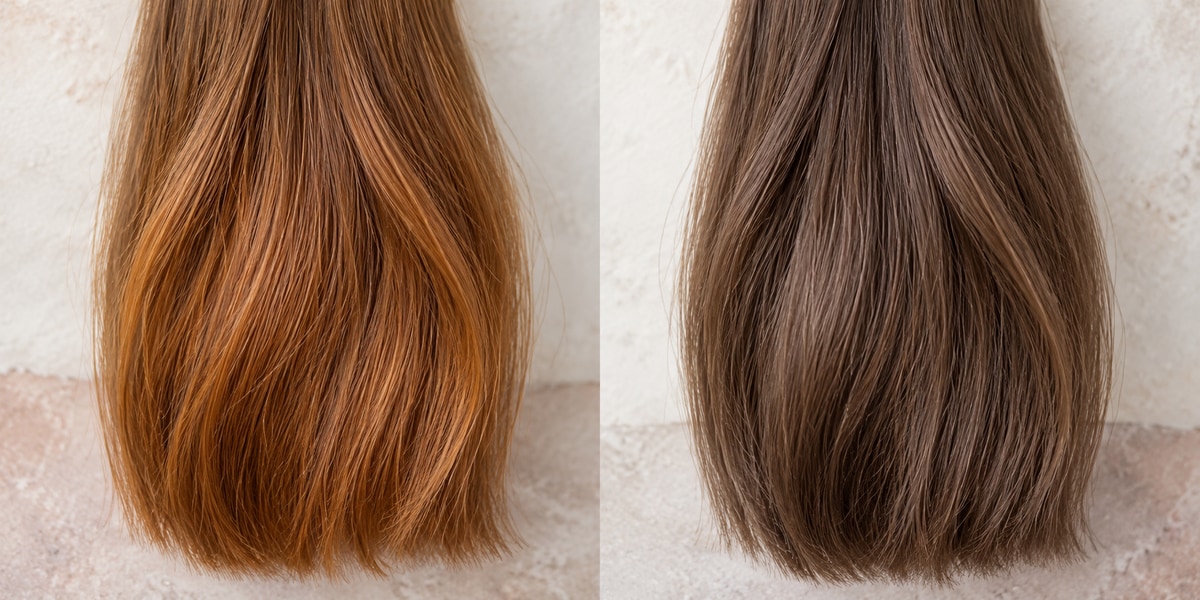
If your current hair is orange at about a darker-blonde depth and your reference is pale ash blonde, decide which problem you are solving first. Blue pigment can make the existing orange look less prominent; it cannot raise the level. If your goal is a cool brunette at roughly the same depth, a professional gloss or carefully chosen maintenance product may be a closer match. The colorist still needs your base, color history, and hair condition to choose the process.
Green Cancels Red (Levels 1–5 Dark Brunette & Black)
A red reflection in deep brown or black-looking hair points toward green on the wheel. That does not mean buying a bright green dye and applying it directly. Professional green or matte directions are formulated within color lines, and the desired dose depends on how red the hair is, its depth, and what finish you want. Wella’s brassiness guide identifies green as a direction for excess red in a professional tonal plan.
On levels 1–5, the red may come from exposed underlying warmth, faded artificial color, or a previous red service. Those histories call for different decisions. If the color is deliberately auburn or mahogany, green correction would work against your goal. If you see red only in strong sun, ask whether it truly bothers you in everyday light. If your lengths have uneven red bands or old dark dye, a simple home color-depositing product may settle differently from roots to ends. A colorist can assess the zones and decide whether tonal balancing, color removal, or a new shade plan is appropriate.
A quick check across all three pairs: identify the visible unwanted hue, then its opposite, then ask whether the depth already matches your goal. Do not choose a product solely because of your natural hair category. A brunette with pale blonde highlights may need violet care on the highlights while the darker base needs none. One bottle is rarely the right answer for every zone.
Why Your Purple Shampoo Isn’t Fixing Your Orange Hair
The most common mismatch is simple: purple cancels yellow, while blue cancels orange. If you are calling orange hair “brassy” and reaching for purple shampoo, you are matching the broad word brassy rather than the actual color. Purple may affect any yellow mixed into the strand, but distinct copper-orange warmth can remain. Adding more purple or leaving it on longer is unlikely to make orange hair become pale blonde, and it may over-tone porous lighter pieces. Redken answers this purple-versus-orange question directly.
Use this daylight check before changing products. Look at dry hair near a window, out of direct sun. Hold a white or neutral surface nearby to notice a strong yellow room-light cast. Compare the warmest zone with a plain orange and a plain yellow object or swatch; you are looking for the dominant reflection, not an exact digital color match. Check whether that zone is root, middle, end, or a highlight. If it looks between orange and yellow, a blue-violet plan may be more suitable than either pure direction. Take photos in the same light for a salon conversation, but do not use a filtered image as the sole diagnosis.
Next ask whether the depth is already right. Orange level 6 hair can be made cooler at roughly level 6; it cannot become pale level 9 blonde by shampooing. If you have recently lightened hair and it feels unusually fragile, stop experimenting with additional chemical steps and ask a colorist to examine it. A visible orange band may also signal uneven lightening or previous dye, which a tinted wash cannot reliably even out. The hair color levels chart helps separate the depth question from the tone question.
Toning at Home vs. In-Salon Color Correction
At-home tinted care is best thought of as maintenance for a modest tonal shift on hair that is already close to the desired depth. Purple or blue shampoo and color-depositing masks place pigment on the hair to soften visible warmth. Their effect varies with the product and the hair, and they do not perform a lightening service. Choose the shade family for the actual warm reflection, read the label’s hair-color suitability, follow its directions and contact time, and stop if the color looks too cool or uneven. A strand test according to the product instructions can help you see how porous ends respond.
A salon toner or demi-permanent gloss gives a colorist more control over the tonal direction, level, and placement. It is useful when a simple wash cannot create the finish you want, when different zones show different warmth, or when the hair has a complicated dye history. The service may need separate decisions for roots, mids, and ends. “Demi-permanent” does not itself guarantee a particular result or no damage; the formula and processing method depend on the brand and professional assessment. Wella’s brassiness guide distinguishes semi-permanent refreshes from demi-permanent and other salon color options according to the goal.
Color correction is a broader project when depth, old pigment, or uneven bands are the main issue. Suppose the mids are orange, the ends pale yellow, and the root is a dark natural brown. A blue shampoo over everything might tone the mids a little while leaving a dull cast on the pale ends. A colorist may instead assess the history, test a strand, plan targeted lightening or toning, or recommend a different achievable finish. Ask what each step changes: depth, tone, or both? That question is more useful than requesting a toner name from a photo.
You can prepare a concise salon brief: your natural root depth, every recent color or lightening service you remember, the exact zones that look yellow, orange, or red, and two references showing the target in ordinary light. State your preferred maintenance level. Ask, “Can we reach this depth safely, and which warm background is likely to show? What will the color look like as the toner fades?” A colorist can then explain whether maintenance pigment, a gloss, or a larger correction is realistic for your hair.
For routine care, use the tinted product only as its maker directs, watch the result in consistent light, and return to ordinary washing when the tone is where you want it. More pigment is not automatically better. If color repeatedly turns uneven or the warmth returns quickly, a consultation can identify whether the problem is product choice, porosity, fading, or the underlying level.
Frequently Asked Questions
What color cancels yellow hair?
Violet is opposite yellow on the hair color wheel. It can soften unwanted yellow in light blonde hair when the depth is already suitable. If the strand looks orange rather than yellow, assess a blue direction instead. A professional may choose a blended direction for yellow-orange hair.
What color cancels orange hair?
Blue is opposite orange. It can make copper-orange warmth appear less prominent, but it does not lighten hair. For a pale blonde target, ask whether your current orange base needs more lightening before a final toner. A blue product on very pale, porous blonde sections can create an unwanted cool cast.
What color cancels red hair tones?
Green sits opposite red. On dark hair, a professional green or matte tone may soften unwanted red reflection. First distinguish an unwanted red cast from a red shade you intentionally chose, and tell the colorist about past dyes. Avoid trying to mix a custom green correction at home.
Can purple shampoo tone orange hair?
It may soften a yellow part of a mixed orange-yellow strand, but distinct orange calls for blue, and purple shampoo will not make the hair lighter. Redken’s guidance recommends blue shampoo for orange brunette warmth. If there are several colors across the hair, get the zones assessed before applying one tinted product to all of them.
Does toner remove brassiness permanently?
Toner changes the visible reflection; it does not permanently remove the warm background or guarantee that warmth will never reappear. Color can fade, and the underlying level remains relevant. Ask how the chosen finish is expected to change between appointments and which maintenance product, if any, fits it. If the depth is wrong, toning alone will not solve that.
The wheel gives you a useful first sentence for your next color conversation: “My hair looks [yellow, orange, or red] in daylight, and I want [a cooler tone at this depth or a lighter result].” If you are still choosing a broader shade direction, the hair color analysis guide helps compare depth, tone, and upkeep. The hair color quiz can organize your shade preferences; bring your daylight observations and color history to a colorist.