How to Find Your Perfect Hair Color Ideas (Without Getting Overwhelmed)
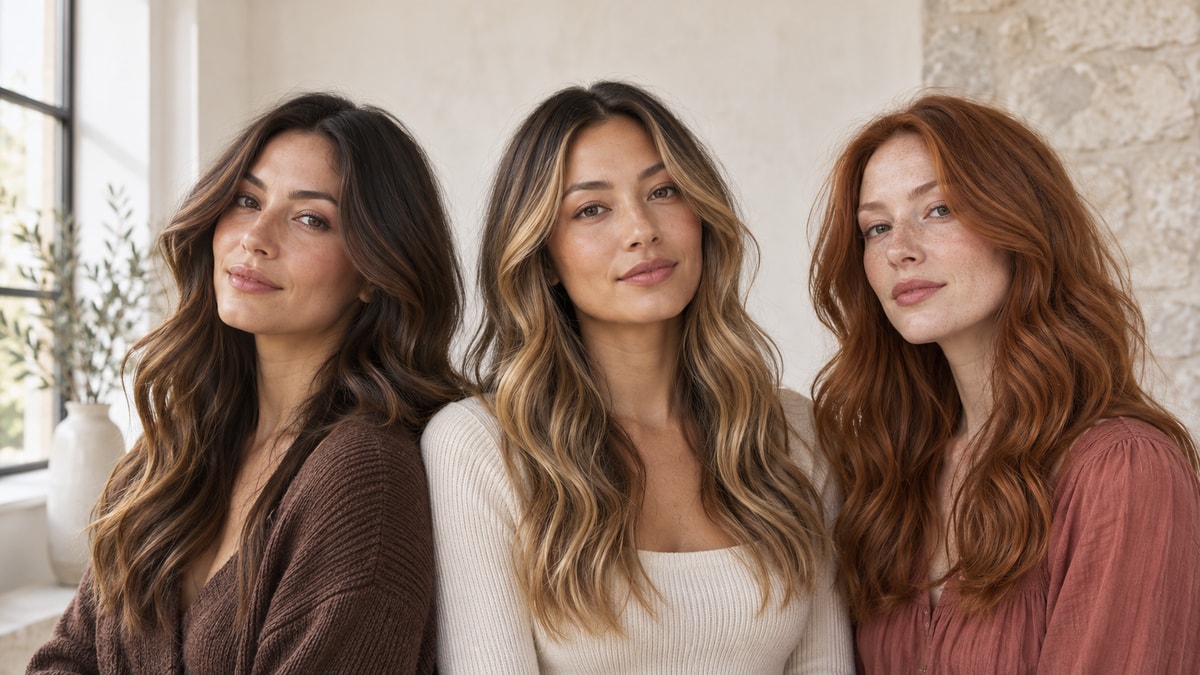
The short answer: Start with three questions: How dark or light is your natural hair? Do you prefer warm, cool, or balanced color beside your skin? How often do you want to maintain the result? A shade close to your natural depth and a softly blended root will usually make a gentler first change than platinum or a vivid all-over color. The photograph that excites you is a starting point for a salon conversation, not a promise of the same result.
| If your priority is… | Begin with… | Ask about… |
|---|---|---|
| Less visible grow-out | Gloss near your natural depth, lived-in brunette, soft balayage | How much natural root can remain? |
| A noticeable but flexible change | Face-framing pieces, chestnut or auburn tone, gray blending | What will the color look like between visits? |
| A dramatic shift | All-over platinum, vivid copper, or very deep black | What are the first appointment, upkeep, and reversal plans? |
These are directions, not fixed appointment schedules. A saved image rarely shows the starting hair, the processing history, or the upkeep behind the finish. Use the filters below to turn a crowded inspiration folder into two or three ideas a colorist can actually assess.
The Pinterest reality check: 3 filters every hair photo must pass
A photo is a record of one result under one set of conditions. Ring lights, warm indoor bulbs, retouching, and phone displays can change how beige, gold, ash, and copper appear. Look for a second image in indirect daylight. If every reference has a dramatically different cast, compare the darker root and the lightest pieces rather than relying on the shade name in a caption.
1. Compare the starting base. A pale beige blonde on hair that started light is a different project from the same target on naturally dark brown hair. Find the model’s root, if visible, and ask whether it resembles yours. Professional level systems describe depth from dark to light; the exact labels vary by brand. Wella’s level and tone chart separates depth from the warm or cool reflection within a level. Bring a daylight photo of your own untreated root so the comparison has a real starting point.
2. Account for hair history and texture. Permanent dark dye, henna, previous lightening, and some chemical treatments can change what is feasible in one visit. Fine or porous hair may also respond differently from dense, less porous hair. Tell the colorist what has been applied to the lengths, even if the last color was months ago. A reference can communicate your goal; it cannot reveal how your hair will lift or how the finished color will feel.
3. Look past the styling. Loose waves separate light and dark ribbons, making dimension easy to see. On straight hair, the same placement can read more boldly. Save at least one straight-hair reference if that is how you usually wear yours. Also notice whether the reference has bright face-framing pieces or most of its lightness at the ends. Placement may matter more to your everyday impression than the name “bronde” or “balayage.”
Filter by your natural depth, skin tone, and contrast
Start with your natural depth: the darkness or lightness of untreated roots. Then separate skin depth (fair to deep) from undertone (the warmth or coolness you perceive beside colors). Surface redness is not the same thing as undertone. Neither a vein test nor a seasonal label can choose a dye formula for you. Compare two references at a similar hair depth, one warmer and one cooler, near your face in indirect daylight. If both appeal, a balanced tone may be a useful starting place.
Your existing contrast gives another clue. Dark brows, deep eyes, and dark hair can create a strong frame around the face. A pale all-over color changes that frame; a darker root or lowlights can keep some of it. If your natural features have softer value contrast, a very dark shade may feel intentionally graphic. Neither direction is inherently better. Ask whether you want to preserve familiar contrast, soften it, or change it decisively. For an example of how depth and temperature can be separated, see our olive-skin hair color guide.
Skin tone is styling guidance, not a restriction. Warm honey can be compelling on someone who usually wears cool colors, and a cool espresso may be exactly the contrast someone wants. Use the mirror and daylight comparison to narrow your options, then let your own preference settle the choice. If you are uncertain, carry both a warm and a cool image of the same level to the consultation instead of asking a colorist to decode an abstract undertone label.
The two-level rule for a gentler first change
Staying within roughly two levels of your natural depth is a planning shortcut, not a guarantee of undamaged hair or invisible roots. It often limits the contrast between new growth and colored lengths, particularly when the root stays natural. A gloss or fine highlights can still involve chemistry and aftercare. Hair that has been colored before may need a different plan even for a modest-looking shift.
Going much lighter is a separate decision. The American Academy of Dermatology notes that lightening more than three shades usually requires stronger peroxide and causes more damage. The amount of lift, the hair’s condition, and previous dye matter more than a universal “safe” number of levels. Ask what the colorist can reasonably achieve while keeping your hair in good condition and how they would change course if a strand test shows fragility.
Four pathways to change your color
Choose a pathway before choosing a shade name. It tells you how much of your present color you want to keep, where you want change to show, and how much regrowth you are willing to see.
1. The natural upgrade: enhance what you have
If you like your overall depth, consider a clear or tinted gloss, a gentle tonal adjustment, or a few pieces close to your base color. A gloss can add shine or shift reflection without making every strand lighter. It does not turn dark hair into pale blonde. If you want to soften a dull-looking brown, compare chocolate and hazelnut at the same depth. If you want to keep the brown but cool down its appearance, compare a neutral mocha with a slightly ashier one.
This is a useful pathway when you are unsure how much change you will enjoy. Ask whether the suggested service uses a demi-permanent or permanent color, what it can cover, and how it fades on your hair. Gray coverage and gray blending are different goals: one aims to obscure the gray more fully, while the other lets it remain part of the pattern. Show which result you mean.
2. Dimensional ribbons: balayage and babylights
Dimension means visible variation in depth or tone. Balayage places lighter pieces in a painted pattern; babylights are very fine highlights. Neither technique has one required shade. A brunette can keep most of the natural depth and add caramel, beige, or soft mocha ribbons. Keeping a natural-looking root can make new growth less abrupt, though the bright pieces may still need toning or refreshing.
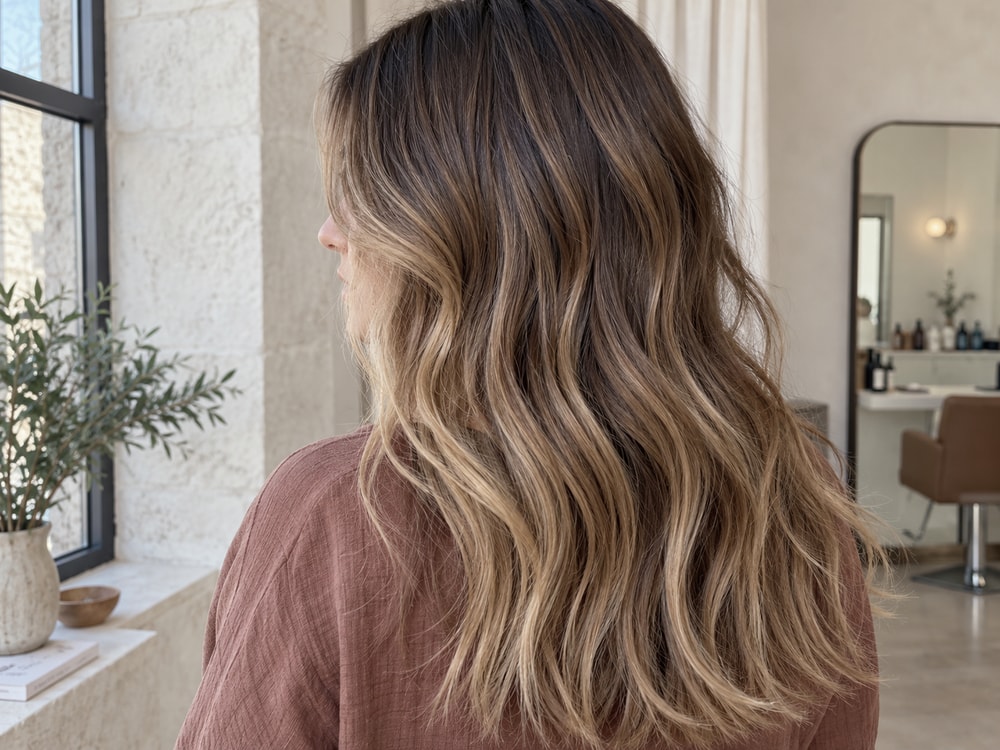
For a lived-in bronde, look for a continuous transition from root to midlengths rather than a sharp light band. Redken’s highlighting guide discusses root shadows and soft grow-out; Wella’s subtle-highlights guidance shows why leaving the base visible changes the finish. Ask where the brightest pieces will fall when your hair is worn straight, and whether the root will be your natural color or a colored shadow that also grows out.
3. Tone shift: same depth, different mood
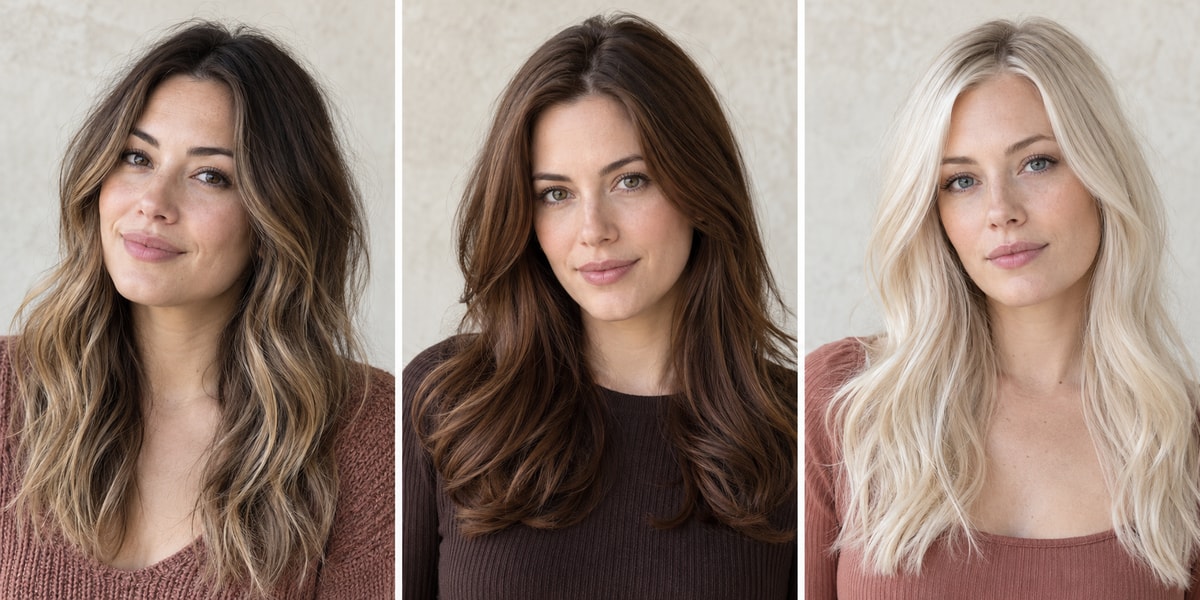
A chestnut brown and a mushroom brown can have similar depth while looking very different beside the face. One reflects more warmth; the other is muted and cooler. A same-depth shift may be less dramatic than a large lift, but it is not always a simple one-step swap. Old permanent dye can limit a cool target, and very ashy references can be misleading under blue-tinted light.
Pick paired references with similar darkness, then say what you want to change: “Keep this medium-brown depth, but make the red reflection quieter,” or “Keep the depth and add a warmer chestnut glow.” That sentence gives a colorist a more precise target than “I want warm ash.” Ask to see a swatch or examples under neutral light before selecting a toner.
4. Complete transformation: go bold with a process plan
All-over platinum, vivid copper, and root-to-tip jet black can be deliberate, satisfying choices. They change the whole frame around the face and often require a firmer maintenance commitment. The process is especially important if you are moving from dark dye to blonde or from repeated lightening to a deep permanent shade that you may later want to remove.
Before a radical change, ask for a consultation that covers your color history, a small strand test when appropriate, the likely first-session result, and a fallback if the hair does not respond as hoped. A strand test looks at the result and condition of a few hairs. It is separate from the skin allergy test required by the product directions; the FDA advises following dye instructions and patch testing. Do not rely on a social photo to decide that a specific number of sessions will be enough.
Match the idea to your lifestyle and salon budget
The visible regrowth line and the fading of the tone are two different clocks. A softly placed highlight can grow out comfortably while its beige toner needs a refresh. A dark permanent root color can look glossy for weeks but show new growth sooner. Decide which change bothers you first: a darker or lighter root, fading warmth, gray at the part, or dryness in lightened lengths.
| Direction | Typical reason to return | Home-care question | Processing consideration |
|---|---|---|---|
| Gloss or demi glaze | Tone fades or shine changes; timing varies by formula | Which cleanser and heat routine suit this color? | May be lower commitment, but still requires product-specific assessment |
| Balayage or babylights | Tone refresh or brighter pieces, even if the root grows softly | Will lightened lengths need conditioning or a targeted toning product? | Lightening can affect hair condition, especially on fragile ends |
| All-over single process | New growth or gray coverage becomes visible | How should I limit fading between visits? | Permanent color may be harder to reverse than a gloss |
| Platinum or major lift | Root contrast, tonal change, or condition needs attention | What care and toner schedule is realistic for my hair? | Substantial lightening can increase dryness and breakage risk |
Treat these as conversation prompts rather than a salon calendar. A two- or three-visit yearly balayage plan may suit one person; another may want more frequent toner appointments. An all-over root color might be refreshed after a few weeks, while someone happy with a softer line waits longer. Ask your colorist for a plan in appointments per year and the services at each visit, then compare it with the time and money you actually want to spend. If you want the most flexible first step, ask which parts of the current hair can stay untouched.
Build a reference deck for your colorist
A good deck is small and specific. Save two photos you like and one photo that shows what you do not want. For the first, identify the overall depth and tone. For the second, point to placement: dark root, face-framing pieces, or light ends. For the third, say whether the problem is too much warmth, a hard root line, chunky stripes, or a shade that feels too light. A “no” photo is most useful when you can name the visible feature, rather than the person wearing it.
Try to include references with hair similar to yours in starting depth and texture, photographed in daylight and, if possible, worn in your usual style. Do not discard a useful photo just because the model’s skin is different. Use it to show a hair-color feature, then check the shade beside your own face. A colorist can interpret the goal with your starting hair in mind.
Bring a concise history: natural root, previous permanent dye or lightening, gray coverage goals, chemical treatments, and how you usually style. Then ask these questions:
- Which part of these photos is achievable on my hair at the first appointment?
- Will my natural root remain visible, and what will the grow-out look like?
- Do you recommend a strand test or a staged plan?
- Which tones are likely to fade first, and what refresh would I need?
- If I want to go back toward my natural color, what would that involve?
Photograph your current hair in indirect daylight before the appointment. If the reference has a filter or an obviously warm or cool cast, tell the colorist what you like about it without claiming the phone screen represents the exact dye result. The conversation should end with a realistic direction and a maintenance plan, not merely a name such as “copper brown.”
Frequently asked questions
How do I know which hair color idea will look natural on me?
Compare shades close to your natural depth, then test warmer and cooler references in daylight. Your preferred contrast and the way the color grows out matter as much as an undertone label. Keeping some natural root can make a noticeable change feel familiar without limiting you to your current shade.
What is a low-maintenance hair color idea?
A gloss near your existing depth or dimensional color that leaves the natural root visible can make regrowth less noticeable. The refresh schedule depends on your hair, the placement, and the look you want. “Low maintenance” may mean fewer root appointments, but lightened ends may still need care or a toner.
Can I go from dark brown to blonde in one session?
Sometimes a visible change is possible in one visit, but a particular blonde result cannot be promised from a photo. Previous color, hair condition, and a strand test may point to a staged plan. Ask what shade and condition are realistic after the first appointment before agreeing to the final target.
Your next step
Choose one pathway, save two useful references, and write down how many salon visits a year you would be comfortable with. Take that short brief to a colorist. The hair color quiz can help organize your preferences into three shade directions.